
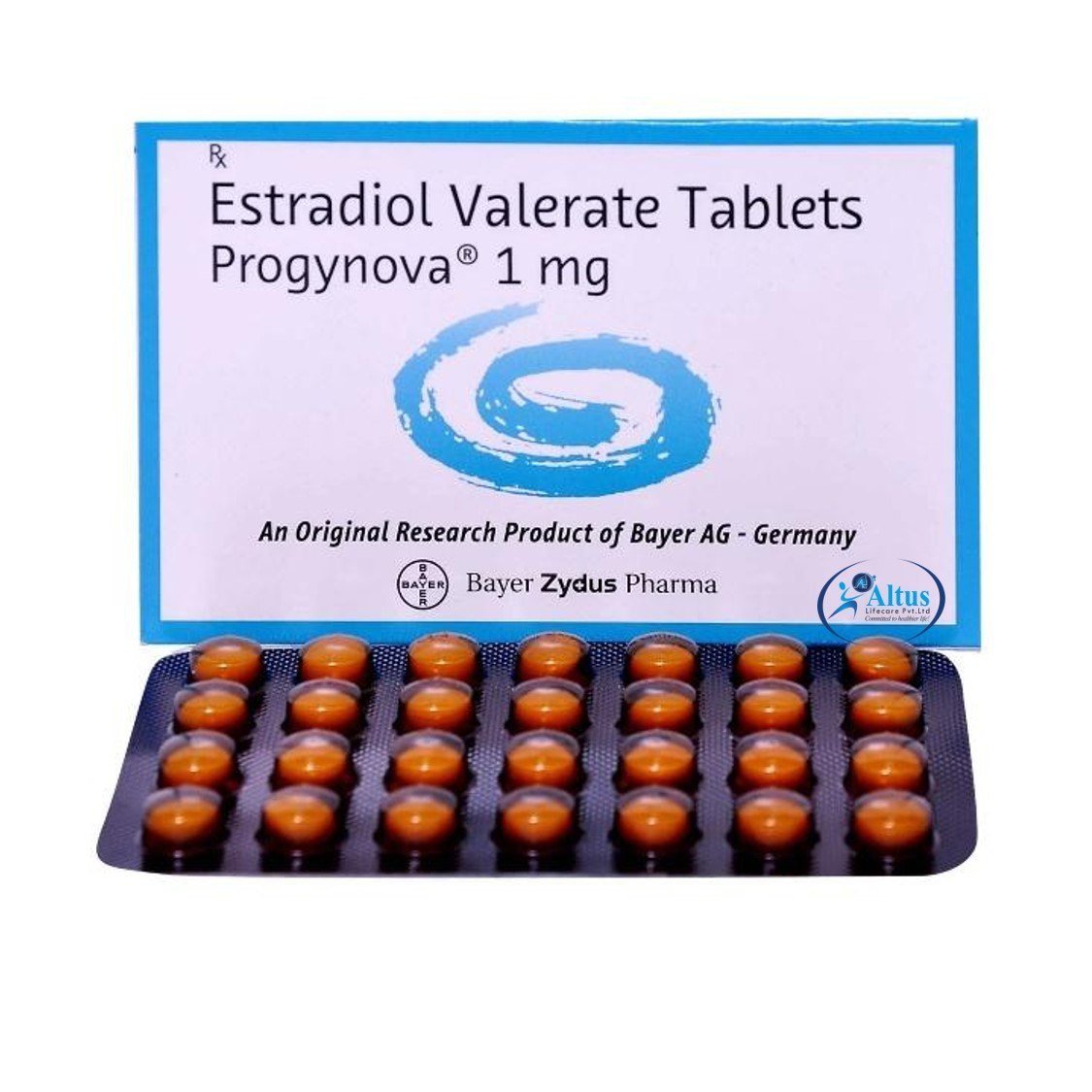


What Is Progynova 2 mg?
- Active Ingredient: Estradiol valerate (2 mg)
- Pharmaceutical Form: Tablet, oral.
- Manufacturer / Marketer: Bayer Zydus Pharma Pvt Ltd.
- Brand Classification: It’s part of Hormone Replacement Therapy (HRT), specifically estrogen therapy.
Mechanism of Action
- Estradiol valerate is a prodrug: once ingested, it’s converted in the body into 17β-estradiol, which is the same estrogen that the body naturally produces.
- This estradiol binds to estrogen receptors (ER-α, ER-β) in various tissues (bone, brain, blood vessels, uterus, etc.), activating the normal physiological effects of estrogen.
- Because it’s taken orally, there is a first-pass effect in the liver, meaning the liver metabolizes a significant portion before it reaches systemic circulation. That has implications for side effects, especially on liver-synthesized proteins.
Indications / What It’s Used For
Progynova 2 mg is typically prescribed for:
- Relief of menopausal symptoms: such as hot flushes, night sweats, mood changes, sleep disturbances, irritability, dizziness, urinary issues, and signs of mucocutaneous atrophy (vaginal dryness, thinning of skin) after menopause.
- Estrogen deficiency after ovariectomy (surgical removal of the ovaries) or radiological castration (if it was done for non-cancerous diseases).
- Prevention of osteoporosis in postmenopausal women, when other treatments are not suitable.
Dosage and Administration
- Usually, Progynova 2 mg is taken once daily, orally.
- It can be taken with or without food, but consistency matters (same time each day is recommended).
- Before you start, a full medical and gynecological check is often done (including breast examination), to assess risk factors.
- Depending on whether a woman still has her uterus, additional progestogen therapy might be required to counteract estrogen’s risk on the uterine lining. (Note: unopposed estrogen can lead to endometrial hyperplasia.)
Contraindications / When Not to Use
Progynova should not be used in:
- Pregnancy.
- Women with current or past estrogen-dependent tumors (e.g., certain breast cancers, endometrial cancer).
- Active or previous thromboembolic disorders (blood clots), such as deep vein thrombosis, pulmonary embolism, stroke, or heart attack.
- Severe liver problems, or history of liver tumors.
- Unexplained vaginal bleeding that hasn’t been evaluated.
- Certain metabolic disorders, e.g., severe diabetes with vascular disease, lipoprotein metabolism disorders.
Warnings and Special Precautions
- Long-term use of estrogen therapy carries risks: breast cancer, endometrial hyperplasia, and possibly ovarian cancer.
- There is an increased risk of blood clots (venous thromboembolism), heart disease, and stroke.
- Memory loss is possible if HRT is started at older ages (e.g., > 65 years).
- If you’re planning surgery, talk to your doctor because estrogen therapy may affect bleeding risk; sometimes it’s stopped in advance.
- For women with a uterus, taking a progestogen in addition to estradiol is very important to reduce risk of endometrial overgrowth.
- Regular check-ups are recommended (e.g., mammograms, pelvic exams).
Side Effects
Some of the more common side effects include:
- Headache, migraine
- Breast pain or tenderness
- Irregular vaginal bleeding or spotting
- Abdominal bloating, nausea, vomiting
- Weight changes, fluid retention (swelling)
- Hair loss
- There’s also a risk of more serious events: blood clots, stroke, heart disease.
Drug Interactions
- Progynova may interact with antiepileptic drugs (like phenytoin) or antibiotics/antimicrobials (like rifampicin) and herbal remedies (e.g., St John’s Wort), which can reduce its effectiveness.
- Some antifungal drugs (e.g., fluconazole) may increase estradiol levels, increasing side effect risks.
- Grapefruit juice may interfere with metabolism.
- It can also affect lab tests — for example, thyroid-function tests may be altered when taking estrogen.
Pharmacokinetics
- After absorption, estradiol valerate is rapidly hydrolyzed into estradiol and valeric acid.
- Because of first-pass metabolism in the liver, a portion is metabolized before reaching systemic circulation, contributing to its risk profile.
- It increases the production of certain liver proteins (clotting factors, globulins), which plays a role in its risk of thrombosis.
Use in Special Populations
- Postmenopausal women: Common indication, especially for symptoms of menopause and osteoporosis risk.
- Women without a uterus: May be used as estrogen-only therapy (but only under medical supervision).
- Women with a uterus: Usually need a progestogen added to reduce risk of endometrial hyperplasia.
- Older women: Risk–benefit must be carefully evaluated (e.g., for cardiovascular risk, cancer risk).
- Pregnancy / Breastfeeding: Contraindicated / not recommended.
Storage
- Follow the medicine packaging instructions (often in blister packs).
- Keep out of reach of children.
- Do not use after the expiry date printed on the package.
Summary / Key Points
- Progynova 2 mg (estradiol valerate) is an oral estrogen therapy, primarily used in hormone replacement therapy for menopausal symptoms and for estrogen deficiency.
- It mimics the body’s natural estrogen once converted to estradiol, but because of how it’s metabolized, it has some significant risks, especially for blood clots, cancer, and cardiovascular disease.
- Because of these risks, it should be prescribed and monitored carefully by a physician; the lowest effective dose for the shortest possible duration balancing benefits and risks is typically recommended.
- Patients need to be aware of side effects, interactions, and the importance of regular checkups.




Reviews
There are no reviews yet.