
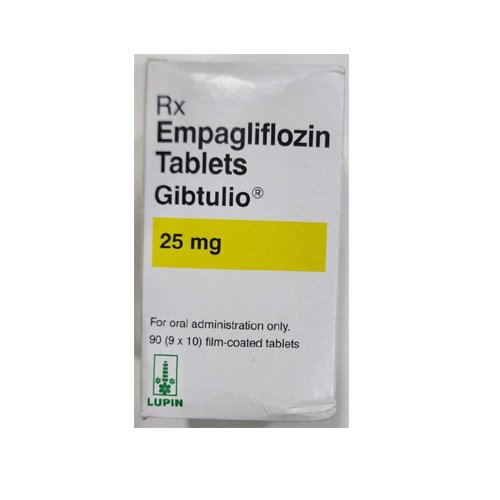


Empagliflozin 25 mg Tablets
1. What is Empagliflozin?
Empagliflozin is an oral medication from the drug class SGLT2 inhibitors (Sodium–Glucose Co-Transporter-2 inhibitors).
Purpose
- Primarily used to improve blood glucose control in adults with Type 2 Diabetes Mellitus (T2DM).
- Also used to reduce cardiovascular death in adults with T2DM and established heart disease.
- Helps in heart failure (HFrEF and HFpEF) to reduce hospitalizations.
- Provides renal (kidney) protection by slowing disease progression.
2. How Empagliflozin Works (Mechanism of Action)
- In kidneys, SGLT2 proteins reabsorb glucose back into the bloodstream.
- Empagliflozin blocks SGLT2, causing:
- Excess glucose to be excreted in urine
- Reduced blood sugar levels independently of insulin
- Mild caloric loss (≈200–300 kcal/day)
- Increased sodium excretion → reduces blood pressure
Key Effects
- Lowers fasting and post-meal blood glucose
- Slight weight reduction
- Mild blood pressure reduction
- Cardiovascular and renal protective effects
3. Available Strengths
Empagliflozin tablets generally come in:
- 10 mg
- 25 mg (your query)
25 mg dose is often used when:
- 10 mg isn’t giving adequate response
- Heart failure or kidney protection benefits are desired
4. Appearance & Composition
Empagliflozin 25 mg tablet (varies by brand):
- Usually white to off-white, round/oval, film-coated tablet.
- Contains:
- Active ingredient: Empagliflozin 25 mg
- Excipients: lactose monohydrate, microcrystalline cellulose, magnesium stearate, hydroxypropyl cellulose, etc. (varies).
5. Uses (Indications)
A. Type 2 Diabetes Mellitus
- Used alone (monotherapy) or with other anti-diabetic drugs such as:
- Metformin
- DPP-4 inhibitors
- Insulin
- GLP-1 receptor agonists
B. Heart Failure
- Reduces risk of:
- Hospitalization for heart failure
- Cardiovascular death
C. Chronic Kidney Disease (CKD)
- Slows kidney function decline.
- Reduces risk of kidney failure progression.
6. Benefits
- Lowers HbA1c by 0.7–1.0%
- Weight loss of 2–3 kg on average
- Low risk of hypoglycemia (unless used with insulin or sulfonylurea)
- Decreases systolic BP by 3–5 mmHg
- Cardiovascular mortality reduction
- Kidney protection independent of glucose control
7. Pharmacokinetics (Technical Details)
| Property | Detail |
|---|---|
| Absorption | Rapid; peak in 1.5 hrs |
| Bioavailability | ~75% |
| Half-life | 12–13 hours |
| Metabolism | Minor – mainly glucuronidation |
| Excretion | Urine + feces |
| Protein binding | 86% |
8. How to Take It
- Taken once daily, with or without food.
- Usually swallowed whole with water.
- Can be taken any time of day.
(Dosing schedules must be advised by a clinician — not provided here.)
9. Who SHOULD NOT Take It (Contraindications)
- Type 1 diabetes (risk of diabetic ketoacidosis)
- Patients on dialysis
- Severe kidney impairment (eGFR cutoffs vary by guideline)
- History of severe hypersensitivity to empagliflozin
10. Possible Side Effects
Common
- Increased urination
- Genital yeast infections (men & women)
- Urinary tract infections
- Thirst
- Dehydration symptoms
- Mild drop in blood pressure
- Weight loss
Less Common
- Increased LDL cholesterol
- Dizziness due to fluid loss
Rare but Serious
- Euglycemic diabetic ketoacidosis (EDKA)
- Necrotizing fasciitis of perineum (Fournier’s gangrene) – very rare
- Severe dehydration leading to kidney impairment
11. Drug Interactions
Be cautious with:
- Diuretics → increases dehydration/hypotension
- Insulin or sulfonylureas → risk of hypoglycemia
- RAAS blockers (ACE/ARB) → monitor kidney function
- Lithium (may alter levels)
12. Special Precautions
- Maintain sufficient hydration
- Monitor kidney function (eGFR)
- Monitor for signs of ketoacidosis: nausea, abdominal pain, rapid breathing
- Good genital hygiene to reduce yeast infection risk
- Stop before major surgery or prolonged fasting
13. Brands (India Examples)
- Jardiance (Original – Boehringer Ingelheim)
- Empa, Glyflozin, Epanorm, Emflo, Empaglow, etc.



Reviews
There are no reviews yet.